If you’ve just purchased a rental property in Calgary or Airdrie, the first question on your mind is probably simple: where do I even start? Being a first-time landlord in Calgary means juggling legal responsibilities, property maintenance, tenant relationships, and financial tracking, often all at once. The good news is that with the right knowledge and a clear plan, renting out your property can be a rewarding and profitable experience. This guide walks you through everything you need to know, from preparing your property to deciding when professional help makes sense.
What Does It Mean to Be a Landlord in Calgary & Airdrie?
Being a landlord in Alberta is not just about collecting rent every month. It comes with real legal obligations that every first-time landlord in Calgary needs to understand before they hand over a set of keys.
Alberta’s Residential Tenancies Act (RTA) is the main piece of legislation that governs the relationship between landlords and tenants in the province. It covers everything from how you collect a security deposit to how much notice you need to give before entering a rental unit. Under the RTA, landlords are required to provide a safe, habitable space, maintain the property in good repair, and follow strict rules around rent increases, evictions, and lease terminations.
What surprises many new landlords is just how specific these rules are. For example, a security deposit in Alberta cannot exceed one month’s rent, and it must be held in a trust account. If you fail to follow these rules, even accidentally, you could face penalties or disputes through the Residential Tenancy Dispute Resolution Service (RTDRS). Understanding the RTA from the start is not optional; it is the foundation of responsible property ownership.
Beyond the legal side, being a landlord also means being responsive, organized, and professional. Tenants are placing their homes in your hands, and how you manage that responsibility directly affects your reputation, your vacancy rates, and your long-term returns.
How Do You Prepare a Rental Property Before Listing It?

The condition of your property at the time of listing sets the tone for everything that follows. A clean, well-maintained, move-in-ready rental attracts better tenants, justifies a higher asking rent, and reduces the time your property sits vacant.
Start with a thorough cleaning of every room, including inside cupboards, behind appliances, and all bathroom surfaces. Then walk through the property room by room and note anything that needs repair: dripping faucets, scuffed walls, damaged flooring, or broken fixtures. Addressing these issues before listing is far cheaper than negotiating repairs with a tenant after the fact.
Safety checks are equally important. Make sure smoke detectors and carbon monoxide detectors are working and up to code. Check that all door locks function properly, and confirm that any shared spaces or parking areas are well-lit. In Alberta, landlords are legally responsible for ensuring the property meets basic health and safety standards before a tenant moves in.
Curb appeal matters more than many first-time landlords expect. A well-maintained exterior, tidy landscaping, and a clean entryway all signal to prospective tenants that the property is looked after. Combine this with professional-quality photos and a strong listing description, and you will fill your vacancy faster and with stronger applicants.
What Repairs and Upgrades Add the Most Rental Value?
Not every upgrade is worth the cost, but a few targeted improvements can meaningfully increase what your property commands on the market. Fresh paint is consistently one of the highest-return investments you can make. A neutral, clean colour scheme makes the space feel larger and more modern without a major outlay.
Updated light fixtures and cabinet hardware are low-cost changes that immediately refresh the feel of a kitchen or bathroom. If your appliances are outdated or unreliable, replacing them with mid-range stainless steel models can add noticeable rental appeal, particularly in Calgary’s competitive market where tenants have options.
Flooring is another area worth considering. If carpet is worn or stained, replacing it with durable vinyl plank flooring is a practical upgrade that looks sharp and is easy to clean between tenants. These kinds of improvements not only support a higher rent price, they also reduce tenant complaints and turnover, which is where many landlords quietly lose money.
How Do You Set the Right Rental Price in Calgary?
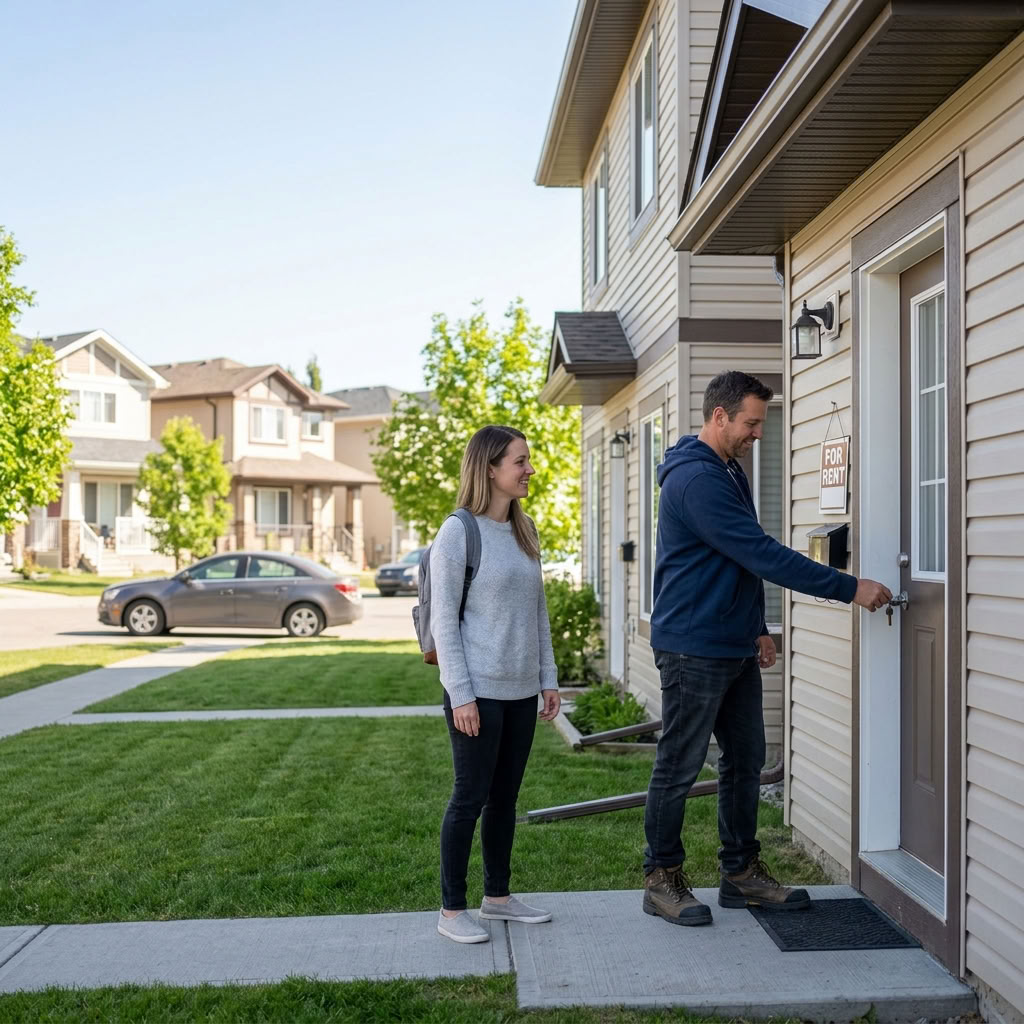
Setting the right rent is one of the most important decisions a first-time landlord in Calgary will make, and it requires research rather than guesswork.
Start by reviewing comparable rentals in your area. Look at properties that are similar in size, condition, location, and included amenities. Platforms like Rentfaster.ca and Kijiji are useful starting points for understanding what the local market is currently asking. Pay close attention to listings that are actively renting versus those that have been sitting for weeks, as prolonged vacancies often signal overpricing.
Calgary’s rental market has remained strong in recent years. As of 2026, average monthly rents for a two-bedroom apartment in Calgary sit around $2,100 to $2,400, depending on the neighbourhood and building type, while Airdrie tends to run slightly lower for comparable units. These figures provide a useful benchmark, but your specific property’s features, condition, and location will determine where you land within that range.
Overpricing is the most common mistake first-time landlords make. A vacant property earning nothing costs you far more than a slightly lower rent with a reliable, long-term tenant in place. On the other hand, underpricing can attract high volumes of applications but may signal to quality tenants that something is wrong with the unit. Pricing thoughtfully, based on real market data, protects your return on investment from day one.
What Should First-Time Landlords Know About Tenant Screening?
Tenant screening is the single most important step in the rental process. A thorough screening process helps you find tenants who will pay on time, care for the property, and stay for the long term. Skipping or rushing this step is where many first-time landlords run into expensive, stressful problems.
A complete screening process should include a credit check, employment and income verification, and a review of the applicant’s rental history. For income, a general rule of thumb is that a tenant’s gross monthly income should be at least three times the monthly rent. For credit, look for a score above 650 as a baseline, though context matters. A low score with a clear explanation is different from a pattern of missed payments.
Always contact previous landlords directly, not just the references listed by the applicant. Ask specific questions: Did they pay on time? Did they leave the property in good condition? Would you rent to them again? The answers will tell you far more than a reference letter ever could.
In Alberta, tenant screening must comply with the province’s human rights legislation. You cannot reject an applicant based on race, gender, religion, family status, or other protected grounds. Your screening process must be consistent, documented, and based on objective financial and rental history criteria.
What Red Flags Should You Watch for When Reviewing Applicants?
Some warning signs in a rental application are worth pausing on. Inconsistent or unverifiable income documentation is one of the most common. If an applicant cannot provide recent pay stubs, a letter of employment, or bank statements to confirm their income, that is a reason to ask more questions before proceeding.
Gaps in rental history, where an applicant cannot account for where they were living for a period of time, can indicate a previous eviction or difficult tenancy that they are not disclosing. Similarly, references who are hard to reach, overly vague, or reluctant to speak positively should prompt a closer look.
If an applicant pressures you to make a quick decision, offers to pay several months upfront without explanation, or asks you to skip parts of the application process, treat these as signals to slow down rather than speed up. A quality tenant will welcome a thorough process because it also signals to them that you are a professional and organized landlord.
How Do Lease Agreements Protect First-Time Landlords?

A lease agreement is your most important legal document as a landlord. It defines the terms of the tenancy, protects your property, and gives you a clear framework to resolve disputes if they arise.
Alberta has a standard Residential Tenancy Agreement that landlords can use, and it must comply with the requirements of the Residential Tenancies Act. At minimum, your lease should clearly state the monthly rent amount, the lease term, the due date for rent, the amount of the security deposit, and any rules around pets, smoking, and subletting.
Beyond the basics, your lease should spell out who is responsible for which utilities, what the process is for maintenance requests, and what the consequences are for late payment. The more clearly these terms are written, the less room there is for misunderstanding later. Vague lease agreements are where disputes are born.
Many first-time landlords in Calgary make the mistake of using a generic template downloaded from the internet. These documents may not reflect Alberta-specific legal requirements, which can make certain clauses unenforceable. Working with a professional property manager or a real estate lawyer to review your lease before you use it is a worthwhile investment that protects everything you have put into your property.
What Are Your Maintenance Responsibilities as a First-Time Landlord?
Under the Residential Tenancies Act, landlords in Alberta are legally required to keep rental properties in a good state of repair and ensure they meet health and safety standards. This obligation exists regardless of what a lease agreement says; you cannot contract out of your basic maintenance duties.
As a landlord, you are responsible for the structure of the building, major systems like heating, plumbing, and electrical, and any appliances that were included in the rental. Tenants, on the other hand, are generally responsible for keeping the property reasonably clean and reporting issues promptly. They are also responsible for any damage they or their guests cause beyond normal wear and tear.
Having a clear maintenance process in place before your first tenant moves in saves you time and protects your relationship with your tenant. Whether you manage repairs yourself or through a trusted network of tradespeople, tenants need to know who to call, how to reach you, and what to expect in terms of response time. Excelsior Rentals, for example, provides 24/7 maintenance support for the properties it manages, which is a significant advantage for landlords who do not want to be on call at all hours.
How Should You Handle Maintenance Requests Efficiently?
Set up a simple, consistent system for tenants to report maintenance issues. This could be as straightforward as a dedicated email address, a WhatsApp message, or an online portal. What matters most is that tenants know exactly how to reach you and that their requests are acknowledged quickly.
When a request comes in, respond within 24 hours even if the repair itself cannot happen immediately. Acknowledging the issue and giving a realistic timeline shows the tenant that you take your responsibilities seriously. Tenants who feel heard and respected are far more likely to renew their lease and take care of the property.
Fast response times to maintenance issues also protect your investment. A small leak that goes unaddressed can become a mold problem within days. An ignored heater issue in a Calgary winter can escalate to a legal emergency under the RTA. Staying on top of maintenance is not just good customer service; it is sound financial management.
How Do You Manage Rental Finances as a New Landlord?

Getting your finances organized from the start makes everything easier, from tax preparation to investment decisions. Many first-time landlords underestimate the importance of tracking their rental income and expenses clearly from day one.
At a minimum, you should keep a record of every rent payment received, every expense paid, and every repair or improvement made to the property. A simple spreadsheet works in the early stages, though many landlords eventually move to dedicated property management software or accounting tools. Your accountant will thank you come tax season.
It is also important to understand the difference between cash flow and profit. Cash flow is what remains after you pay your mortgage, insurance, property taxes, and maintenance costs each month. Profit is a broader measure that accounts for appreciation, equity growth, and tax advantages. A property that appears cash-flow neutral in the short term may still be an excellent long-term investment when the full picture is considered.
Transparent financial reporting also helps you make smarter decisions about your property. If your maintenance costs are climbing, that may signal the need for a capital improvement. If vacancy periods are increasing, that may prompt a pricing review. Treating your rental property as a business with clear financial records puts you in a much stronger position as an investor.
When Does It Make Sense to Hire a Property Management Company?
Many first-time landlords in Calgary start by managing their property themselves. It feels like the logical choice when you only have one unit and want to stay close to your investment. But self-managing comes with hidden costs that are easy to underestimate, including your time, stress, and the risk of costly mistakes.
A professional property management company handles everything from marketing and tenant screening to lease administration, rent collection, maintenance coordination, and financial reporting. For landlords who have full-time jobs, live outside Calgary or Airdrie, or simply want to treat their property as a passive investment, professional management is not a luxury; it is a practical and strategic decision.
The tipping point is different for everyone. Some landlords reach it after their first difficult tenant experience. Others reach it when they add a second property and realize they can no longer handle the workload on their own. What most come to find is that the cost of professional management is more than offset by lower vacancy rates, better tenant quality, and fewer expensive mistakes.
Excelsior Rentals works with first-time landlords across Calgary and Airdrie to provide exactly this kind of support. With local market expertise, technology-forward tools, and an investor-centric approach, the team at Excelsior helps landlords maximize their returns while removing the day-to-day stress of property ownership. Whether you are ready to hand over full management or simply want guidance getting started, having an experienced partner in your corner makes a real difference.
Frequently Asked Questions
What are the legal requirements for first-time landlords in Alberta?
First-time landlords in Alberta must comply with the Residential Tenancies Act, which sets out rules for security deposits, rent increases, entry notices, lease agreements, and eviction procedures. Security deposits are capped at one month’s rent and must be held in trust. Landlords are also required to maintain the property in a safe and habitable condition throughout the tenancy.
How much should I charge for rent on my first Calgary rental property?
Base your rent on comparable properties in your area, considering size, condition, location, and included features. As of 2026, average rents for a two-bedroom unit in Calgary range from approximately $2,100 to $2,400 per month. Pricing competitively with the market, rather than above it, typically leads to shorter vacancy periods and better tenant quality.
Do I need a property management company as a first-time landlord?
Not necessarily from day one, but it depends on your situation. If you have a full-time job, live far from your property, or are not comfortable handling maintenance, legal issues, and tenant communication, a property management company will likely save you time and money in the long run. Many first-time landlords in Calgary find that professional management pays for itself through better tenant placement and fewer costly mistakes.
What is the most important thing to include in a rental lease agreement?
Your lease must clearly state the monthly rent, the lease term, the security deposit amount, and the rules around pets, smoking, and subletting. Beyond that, include who is responsible for utilities, the process for maintenance requests, and the consequences for late payment. Make sure your lease complies with Alberta’s Residential Tenancies Act.
How do I handle a tenant who stops paying rent in Calgary?
Under the Residential Tenancies Act, if a tenant fails to pay rent, you can serve a 14-day notice to vacate. If the tenant does not pay or move out within that period, you can apply to the Residential Tenancy Dispute Resolution Service (RTDRS) for a formal order. It is important to follow the legal process exactly as outlined in the RTA rather than taking matters into your own hands.
What insurance do I need as a landlord in Calgary or Airdrie?
Standard homeowner’s insurance does not typically cover rental properties. You will need landlord insurance, also known as rental property insurance, which covers property damage, liability, and in some cases lost rental income if the unit becomes uninhabitable. It is also worth recommending that your tenants carry their own tenant’s insurance to protect their personal belongings.
How long does it typically take to find a tenant in Calgary or Airdrie?
In a balanced market, a well-priced, well-presented property in Calgary or Airdrie typically rents within two to four weeks. Properties that are priced competitively, professionally photographed, and listed on high-traffic platforms tend to attract applications faster. Working with a property management company that has strong marketing systems can reduce your vacancy period significantly.
Have a question about renting out your property in Calgary or Airdrie for the first time? Leave a comment below or reach out to the team at Excelsior Rentals. We are always happy to help first-time landlords get started on the right foot.