Lease administration is one of the most important parts of running a rental property, yet it’s often the area where Calgary landlords run into the most trouble. Whether you own a single condo in the Beltline or a portfolio of homes across Airdrie, how you manage your leases directly affects your income, your legal standing, and your relationship with tenants. This guide covers everything you need to know about lease administration in Calgary, from what goes into a solid lease agreement to when it makes sense to bring in professional help.
What Is Lease Administration and Why Does It Matter?
Lease administration is the process of creating, managing, tracking, and enforcing rental agreements throughout the life of a tenancy. It goes well beyond just signing a lease on move-in day. It includes rent collection schedules, renewal tracking, documentation of amendments, condition reports, compliance with Alberta legislation, and maintaining clear records for every tenancy.
At its core, lease administration is about structure. When landlords manage leases in a consistent, organized way, they reduce the chance of disputes, protect their rental income, and build a paper trail that holds up if issues ever escalate. Without that structure, even minor disagreements can become expensive legal problems.
In Calgary and Airdrie, the rental market has grown increasingly competitive. Vacancy rates have tightened in recent years, and tenant expectations around professionalism have risen alongside them. Landlords who treat lease management as a formal process tend to attract and retain better tenants, avoid costly turnover, and maintain stronger long-term returns on their investment properties.
Key Components of an Effective Lease Agreement
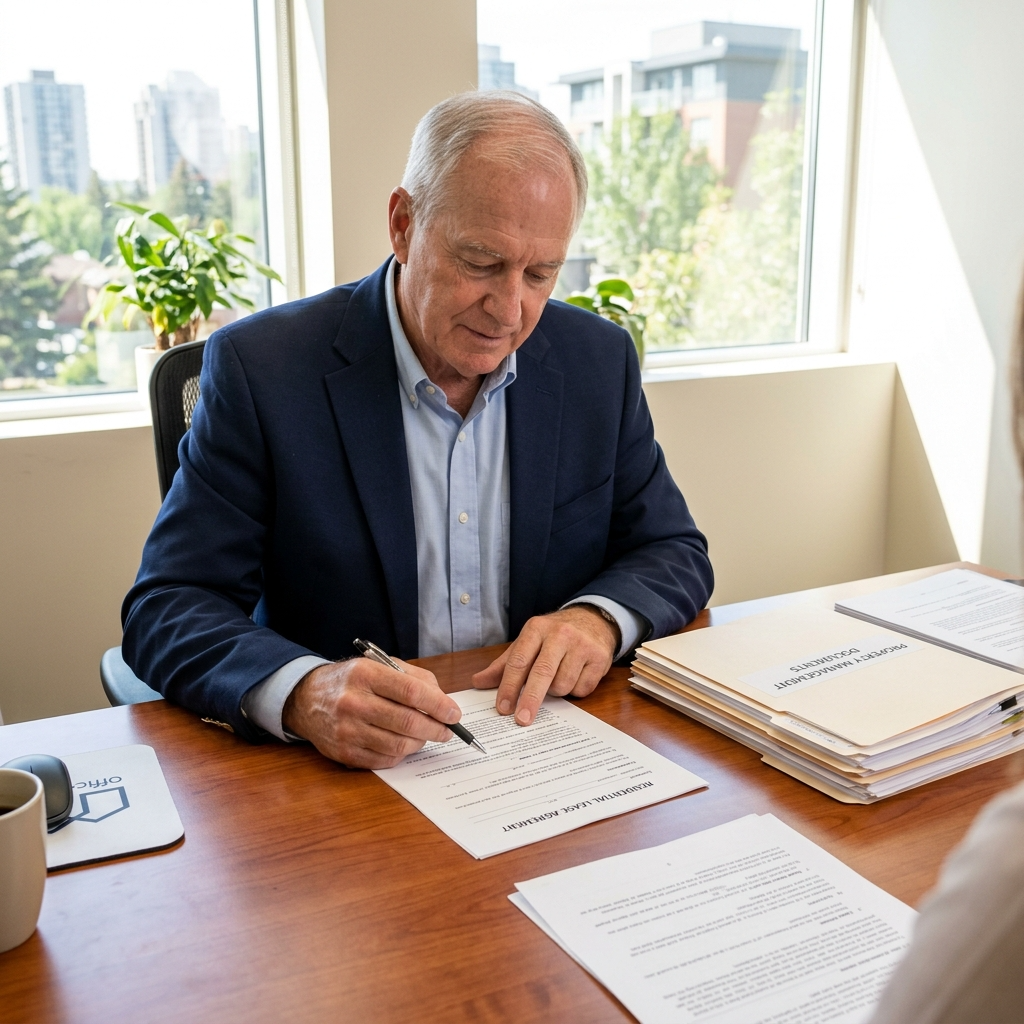
A lease agreement is more than a formality. It’s a legally binding contract that sets the terms of the landlord-tenant relationship. Getting it right from the start prevents confusion down the road.
Essential Clauses Every Calgary Rental Lease Should Include
Every residential lease in Calgary should clearly state the monthly rent amount, the due date, the acceptable payment methods, and the policy for late payments. Alberta’s Residential Tenancies Act (RTA) limits how late fees can be applied, so any clause around penalties must align with that legislation. Leases that include unauthorized fees can create legal exposure for landlords even if the tenant agrees to them in writing.
Maintenance responsibilities are another area where vague language causes real problems. The lease should clearly outline what the landlord is responsible for, such as structural repairs and major systems, and what the tenant is expected to maintain, such as keeping the unit clean and reporting damage promptly. Alberta law requires landlords to keep rental properties in a habitable condition, but defining the finer details in the lease protects both parties.
Entry notice requirements must also be addressed. Under the Alberta Residential Tenancies Act, landlords must provide at least 24 hours’ written notice before entering a rental unit, except in emergencies. Having this written into the lease ensures tenants understand their rights and reduces friction around inspections and repairs.
If you plan to increase rent at any point, an escalation or rent review clause is worth including from the start. Alberta currently has no rent control, but any increase must follow proper notice rules, specifically a written notice provided at least three full months before the increase takes effect for periodic tenancies. Spelling this out in the lease helps avoid disputes when the time comes.
How Lease Terms Affect Your Rental Property’s ROI
The structure of your lease has a direct impact on your cash flow. A fixed-term lease provides predictability. You know when the tenancy ends, and you can plan for potential turnover or rent adjustments in advance. A periodic tenancy, which rolls month to month after a fixed term ends, offers more flexibility but less certainty.
For landlords focused on maximizing ROI, building renewal options and rent review windows into the original lease is a smart move. It keeps good tenants in place while giving you scheduled opportunities to align rent with current Calgary and Airdrie market rates. In 2026, Calgary’s rental market continues to see strong demand, particularly in northeast Calgary and suburban Airdrie, where average rents for two-bedroom units have remained well above pre-pandemic levels. Locking in a reliable tenant at a fair market rate often outperforms frequent turnover at slightly higher rents.
How to Stay Legally Compliant With Lease Administration in Alberta

Legal compliance in lease administration means knowing what Alberta’s Residential Tenancies Act requires and building those requirements into every lease you use. The RTA governs nearly every aspect of the landlord-tenant relationship in Alberta, from security deposits to notice periods to dispute resolution through the Residential Tenancy Dispute Resolution Service (RTDRS).
Key obligations under the RTA include collecting a security deposit of no more than one month’s rent, providing a move-in condition report within one week of the tenant taking possession, giving proper written notice for entry, rent increases, and lease terminations, and keeping rental properties in a livable state throughout the tenancy. These are not optional; they are legal minimums.
Alberta’s tenancy legislation is also updated periodically. Landlords who set up a lease once and never revisit it risk using terms that are no longer legally valid. A clause that was acceptable five years ago may conflict with a legislative update today, and that conflict can void the clause entirely or expose the landlord to a dispute they will likely lose.
Non-compliance comes with real financial consequences. If a landlord fails to follow proper notice procedures or uses unlawful lease terms, the RTDRS can rule against them even when the tenant is in the wrong. Keeping your lease documents current with Alberta legislation is not just good practice; it’s essential protection for your investment.
Common Lease Administration Mistakes Calgary Landlords Make
Most lease-related problems come from the same handful of errors. Understanding them is the first step to avoiding them.
Using Outdated or Generic Lease Templates
One of the most common mistakes is downloading a generic rental agreement from the internet or reusing a lease from years ago without checking whether it still reflects current Alberta law. Templates written for other provinces or other countries may use terms and clauses that are not valid in Alberta, and some may directly contradict the RTA.
Alberta has specific rules around security deposits, notice periods, and tenant rights that differ from other provinces. A lease that works in Ontario may create serious liability in Calgary. At Excelsior Rentals, we see this issue regularly with new landlords who come to us after a dispute has already started. The fix is straightforward: use a lease that has been reviewed against current Alberta legislation and updated as the law changes.
Failing to Document Lease Amendments and Renewals
Verbal agreements between landlords and tenants may feel informal and harmless in the moment, but they can become serious problems when a tenancy ends. If you agree to let a tenant have a pet, paint a room, or defer one month’s rent, that agreement needs to be in writing and signed by both parties.
Without written documentation, lease amendments are nearly impossible to enforce. If a dispute goes to the RTDRS, a hearing officer will rely on what is documented. A written lease addendum takes five minutes to create and can save thousands of dollars in lost deposits or unpaid rent. The same applies to lease renewals. Every renewal should be formalized in writing, with updated terms that reflect current conditions.
Overlooking Move-In and Move-Out Condition Reports
Condition reports are a legal requirement in Alberta, and skipping them is one of the most expensive mistakes a landlord can make. The move-in condition report documents the state of the property at the start of the tenancy, and the move-out report documents its condition at the end. Together, they determine whether any portion of the security deposit can be withheld for damages.
Without a signed move-in condition report, Alberta landlords cannot legally deduct for property damage, even if the damage is obvious. The tenant can successfully dispute any deduction if there is no baseline document to compare against. Best practice is to walk through the property with the tenant at move-in, photograph every room, note any existing wear or damage, and have both parties sign the report. Repeat this process at move-out, and you have a clear, defensible record.
The Role of Technology in Modern Lease Administration

Technology has changed how professional property managers handle leases, and the benefits are available to individual landlords as well. Property management platforms now allow landlords to create, store, and track lease documents in one place, set automated reminders for renewal dates and rent increases, and collect digital signatures without needing in-person meetings.
For landlords with multiple properties in Calgary and Airdrie, centralized digital record-keeping is especially valuable. When every lease, amendment, condition report, and correspondence lives in one system, nothing falls through the cracks. You can pull up any document in seconds rather than searching through email threads or paper files.
Digital document signing has also made onboarding new tenants faster and more professional. Tenants can review and sign their lease remotely, which speeds up the process and reduces the chance of errors that come with paper-based workflows. At Excelsior Rentals, our technology-first approach to lease administration means our landlord clients always know where their documents stand, when renewals are coming up, and what actions are needed to stay compliant.
Automated deadline tracking is another area where technology adds clear value. Missing a rent increase notice window or forgetting to issue a renewal by the required date can result in unintended tenancy rollovers or lost income. A well-configured management platform sends alerts well in advance so those deadlines are never missed.
When Should You Hire a Property Manager for Lease Administration?
Self-managing a rental property is possible, but lease administration carries enough legal and financial risk that many Calgary landlords find it worthwhile to hand it off to a professional. There are a few clear signs that the current approach is creating more risk than it should.
If you are unsure whether your current lease reflects Alberta’s RTA requirements, that is a risk worth addressing immediately. If you have been relying on verbal agreements or handshake understandings with tenants, you are exposed. If lease renewals have been handled informally or not at all, you may already have tenancies operating under terms you did not intend to allow.
Hiring an experienced Calgary property management firm to handle lease administration means your documents are current, your renewals are tracked, your condition reports are completed properly, and any amendments are recorded in writing. It also means you have professional support if a dispute ever reaches the RTDRS.
“The most overlooked lease administration risk we see in Calgary is landlords using the same lease template for years without updating it,” says the team at Excelsior Rentals. “Alberta’s tenancy regulations can shift, and a clause that was fine when you first wrote it may no longer be enforceable. Regular reviews and professional oversight are what protect landlords when things get complicated.”
For investors who own multiple properties or who want to stay hands-off, professional lease administration is not just a convenience. It’s a core part of protecting your asset. Excelsior Rentals works with landlords across Calgary and Airdrie to manage every aspect of lease oversight, from initial agreement drafting to renewals, amendments, and dispute documentation, so property owners can focus on growing their portfolios rather than managing paperwork.
Frequently Asked Questions About Lease Administration in Calgary
What is lease administration in property management?
Lease administration is the full process of managing rental agreements, from creating and signing leases to tracking renewals, documenting amendments, and ensuring compliance with Alberta’s Residential Tenancies Act throughout the tenancy.
What should a rental lease agreement in Calgary include?
A Calgary rental lease should include the rent amount, payment due date, late fee policy, maintenance responsibilities, entry notice requirements, security deposit terms, and any rules specific to the property. All terms must comply with Alberta’s Residential Tenancies Act.
How does lease administration help landlords stay legally compliant in Alberta?
Proper lease administration ensures that all lease terms reflect current Alberta legislation, that required documents like condition reports are completed, and that notices for rent increases, entry, and termination follow the timelines set out in the RTA.
What happens if a landlord uses an incorrect or outdated lease in Alberta?
If a lease contains terms that conflict with the RTA, those terms are void and unenforceable. Landlords may also face rulings against them at the RTDRS if their lease does not meet legislative requirements, even if the tenant is in breach of other obligations.
How often should lease agreements be reviewed or updated?
Lease agreements should be reviewed at least once a year to ensure they reflect any updates to Alberta’s tenancy legislation. They should also be updated whenever terms change, such as at renewal or when adding new rules or clauses.
Can a property manager handle lease renewals and amendments on my behalf?
Yes. A licensed property management firm can draft, review, and execute lease renewals and amendments on your behalf. This ensures renewals are completed on time, properly documented, and legally compliant.
What is the difference between a fixed-term lease and a periodic tenancy in Alberta?
A fixed-term lease runs for a set period, typically 12 months, and ends on a specified date. A periodic tenancy, usually month to month, continues until either the landlord or tenant provides proper written notice to end it. Both types are governed by Alberta’s Residential Tenancies Act, but they have different notice and termination rules.
Lease administration is not a one-time task. It’s an ongoing responsibility that protects your income, your property, and your legal standing as a Calgary landlord. Whether you manage one rental or a growing portfolio, keeping your leases current, documented, and compliant with Alberta’s Residential Tenancies Act is one of the best investments you can make in your rental business.
If you want to take the complexity out of lease administration in Calgary or Airdrie, Excelsior Rentals offers professional lease management as part of our full-service property management approach. Our team handles the details so you can focus on what matters most: building a profitable, stress-free rental portfolio.